Showing posts with label Music. Show all posts

Saturday, 14 March 2020

The Spirit of Paul Weller


The Spirit of Paul Weller

for Ralph Dartford

The spirit of Paul Weller
is on my shoulder
one Saturday in '78.
Up the short hill to the record shop,
the treasure trove,
a cornucopia of delights
in plastic and cardboard.

Nice says Paul as I jangle
the carefully saved coins
in my pocket.

Rows of stacked recordings
contain the aspirations of artists
and the dreams of boys.

Multicoloured covers, some pure art,
others photos of snarling or serious
young men who will change the world.
Paul laughs in my ear,
as if he knows the truth.

I laugh at the man with long hair
and the kaftan on the prog rock album.
Your day is done,
my friend.

My fingers flick through the 45s
as Paul nods or tuts
until one is lifted and exchanged
for coins at the counter.

Where are we going now?, says Paul.


Tim Fellows 2020


Image by Ranya from Pixabay

Friday, 27 October 2017

Saint John

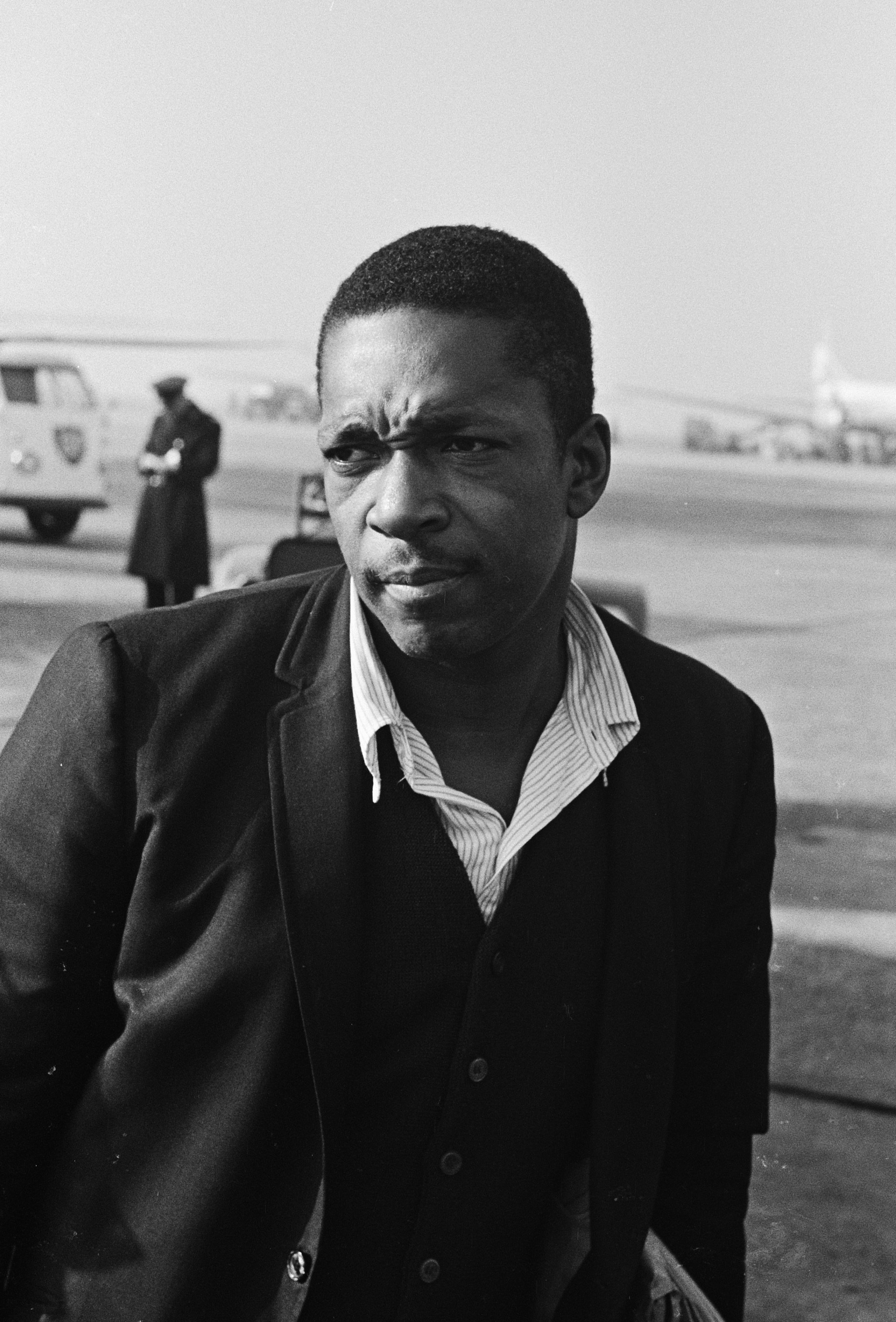
Written for the jazz poetry night at Mexborough on October 1st 2017 - a poem about the veneration of saxophonist John Coltrane and some haikus about my experiences with Jazz.

This is absolutely true - Google it if you don't believe me.

John Coltrane in 1963
Saint John

In San Francisco there's a place
where you can pray, raise up your face
and the music runs at a jazzy pace
- the St. John Coltrane Church

To paint the globe with a message of love
from the legend, the saint, who plays above
with the resonant sound of the mourning dove
at the St. John Coltrane Church

For the saint who so very sweetly blew;
Davis, Armstrong, Ella too,
Billie, Charlie, they'll connect with you
at the  St. John Coltrane Church

Meditate and calm your mind
you will your own true freedom find
in his Spiritual notes you'll be entwined
at the  St. John Coltrane Church


Jazz Haiku

Smoky cellar bar
Cologne, Nineteen eighty nine
My very first live jazz

City of Angels
Warm evening, cold beer, hot jazz
Fast playing trio

Prague, city of jazz
Students, playing for some cash
All different styles

Vltava river
Jazz boat, stranded by the fog
Can't stop the music

(c) Tim Fellows 2017

Tuesday, 3 October 2017

Woody Guthrie


Today marks the 50th anniversary of the death of Woodrow Wilson "Woody" Guthrie.


Guthrie was a songwriter, singer, political activist and a massive influence on modern folk music in the USA and over here. When musicians aren't covering his songs, you can hear (possibly second or third hand in the case of younger ones) echoes of Guthrie musically and lyrically.

Growing up he and his family were the victim of a boom and bust in the local oil industry and later he became a "dust bowl refugee", escaping the failed crops of Kansas to head west to California. He served in the Second World War, seeing it as a "just war" against fascism.

After the war he began to grow in popularity and collaberated with some of the biggest names in folk music, moving to New York. He began to show symptoms of erratic behaviour and mood swings - the first signs of what was eventually diagnosed as Huntingdon's Disease. He spent nearly 15 years slowly deteriorating mentally and physically and eventually passed away on October 3rd, 1967.

For a full biography and loads more information and songs, go to http://woodyguthrie.org/

He was an absolutely prodigious writer - leaving hundreds of songs in his catalogue as a magnificent legacy. His most famous song is probably "This Land Is Our Land" but my favourite is probably "Los Gatos Plane Wreck" also known as "Deportee" which was written in 1948 after a plane crashed in California killing many migrant workers who were either illegal or whose work permits had been terminated. When the radio reported the accident, it didn't name the dead, except for the 3 crew - calling the rest "deportees".

The crops are all in and the peaches are rott'ning,
The oranges piled in their creosote dumps;
They're flying 'em back to the Mexican border
To pay all their money to wade back again
Goodbye to my Juan, goodbye, Rosalita,
Adios mis amigos, Jesus y Maria;
You won't have your names when you ride the big airplane,
All they will call you will be "deportees"
My father's own father, he waded that river,
They took all the money he made in his life;
My brothers and sisters come working the fruit trees,
And they rode the truck till they took down and died.
Some of us are illegal, and some are not wanted,
Our work contract's out and we have to move on;
Six hundred miles to that Mexican border,
They chase us like outlaws, like rustlers, like thieves.
We died in your hills, we died in your deserts,
We died in your valleys and died on your plains.
We died 'neath your trees and we died in your bushes,
Both sides of the river, we died just the same.
The sky plane caught fire over Los Gatos Canyon,
A fireball of lightning, and shook all our hills,
Who are all these friends, all scattered like dry leaves?
The radio says, "They are just deportees"
Is this the best way we can grow our big orchards?
Is this the best way we can grow our good fruit?
To fall like dry leaves to rot on my topsoil
And be called by no name except "deportees"?
Goodbye to my Juan, goodbye, Rosalita,
Adios mis amigos, Jesus y Maria;
You won't have your names when you ride the big airplane,
All they will call you will be "deportees"


Click here for a lovely version by KT Tunstall


Tuesday, 6 June 2017

The Tees flows slower today

The Tees Flows Slower Today

The Tees flows slower today
From Cross Fell to its wide bay

The Black Poplar stands less proud today
Its branches in tribute languidly sway

The music has less joy today
The whistling gently fades away

The kipplers do not bat today
In the Rud yard where they play

The world is a lesser place today
in many ways we can't convey

The world is a lesser place 
the kipplers do not bat
the music has less joy
the Black Poplar stands less proud
and the Tees flows slower today

In memory of Vin Garbutt (1947-2017)


I've not been following folk music for long but I can spot the real deal when I see and hear it. Vin's style was truly unique, both musically and in the "inbetween bits" that separate the best from the rest. His meandering, slightly surreal, gentle humour would be punctuated by his own songs and his interpretations of other people's that would often carry a powerful message that was heightened by the contrast to his humourous, laid-back intros.

I'll lift a glass of red wine for your tonight Vin. Cheers, and thank you.


Sunday, 27 November 2016

A week of coal mining songs - Nov 21-26 2016

On Saturday 26th November my family went to the National Coal Mining museum to see the unveiling of the discs in memory of the three Hooper brothers Jim, Bill and George. Bill was my grandad and I will write about our day at the NCMM separately.

To celebrate this I posted a daily coal mining song (or songs) on facebook and this is a blog post that brings them all together. 


There are many songs and poems about mining, many written by the men themselves. These were men denied a full education, at least in the traditional sense, but used their natural talents to the full to tell us about their lives. My grandparents' generation were the last to truly live the traditional mining life. By the time the family line reached my generation we have a raft of degrees including Masters level and a range of successful careers in business, science, teaching and the arts that were never open to our forefathers.

This intelligence has not suddenly manifested itself since 1950; it was always there. My grandad had tears in his eyes when he spoke to mum about his grandchildren going to University. "Who would have thought it", he said, "When we were living in the Long Rows and scrapping for bits of coal to keep warm." This from a man who had to doff his cap when a mine owner drove past him in his car to help keep his job that was making that man, rich by accident of birth, even richer. 

To the Hoopers, to my other grandad Ted, the Whitaker family and all the other miners and their families: I salute you and I will be forever in your debt.

Monday
Today's song is by Billy Mitchell and it encapsulates the history of the industry from the creation of the raw material itself to the end of this period of exploitation (of the coal and the men).

Enjoy "The Devil's Ground" - you can buy the album on Billy's site and it's got some other great mining related songs on there.

Update - Nov 2017 - it's now sold out but still available "pre-owned" on Amazon, eBay etc.


Tuesday
Today I've selected  two songs by women. Women have played a key role in mining communities, supporting the husbands, fathers and sons by working long, hard hours maintaining the home and looking after children whilst all the time knowing that one of those men may go to work and never come back. This is beautifully described in Billy Mitchell's "Collier Laddie's Wife" from the Devil's Ground album and the impact of the loss of a loved one is heart-breakingly laid out in Jez Lowe's "Last of the Widows". Here I have selected two songs, the first of which (written by Hazel Dickens)
is beautifully sung a capella by the country singer Kathy Mattea whose roots are in West Virginia in the American coalfields.  The second leaves me a blubbering wreck every time - Kate Rusby's ability to mix folk songs with the brass bands of the mining communities in Yorkshire is unique and chimes very much with my own roots in Derbyshire. Both deal not with the sudden loss of a colliery accident but the lingering after effects of breathing in dust. 


Wednesday
Today's song is more of a celebration of the coal mining life - even though it's always been hard, grinding, dangerous work it bred communities with a sense of belonging, comradeship and shared experience. 
The song is "I Can Hew" and it alludes to the life the miners had outside of work and also the theme of family succession into the industry.

"
Well my boy's fourteen, he's a strappin' lad
And he'll go to the pit soon, just like his dad.
And when Friday comes, we'll pick up our pay.
And we'll drink together, to round out the day."
Thankfully this view was not one that my family held and nothing pleased them (and me) more when we were able to break out of the cycle. Thanks for this go to the opening of health and education for all and my family's ability to see beyond the pit heaps.
This version is by Mawkin, who are a great live band and I urge you to see them if you haven't already. 


Thursday

Today gets political. The industry has had a long history of disputes between owners/management and the workers. For many years there was a callous disregard for safety and constant attempts to reduce or limit pay and in a lot of cases the mine owners owned the houses the miners and families lived in, making eviction a likely outcome of resistance.

My grandad took part in the 1926 general strike and at some point joined the communist party. The final straw was having to take his cap off when the local mine owner drove past in his car.

As the coal began to run out, closures and consolidation were inevitable and this culminated in what became the final significant dispute between the NUM and the government in 1984-1985. 

What has left me very bitter and what I consider unforgivable was not the closures per se but the destruction of the communities and jobs with no attempt to replace the work and rebuild the towns and villages left in the lurch. The use of the police for political purposes, the unnecessary force applied and the associated corruption and cover ups still need to be investigated to reveal the full truth.

The first song is by the late Scottish singer and poet Jock Purdon - the title is self-explanatory and the version is by the Pitmen Poets (Jez Lowe, Billy Mitchell, Bob Fox and Benny Graham)


The second song on the same theme is by one of the Pitmen Poets, Jez Lowe from County Durham. Jez is a great writer and performer and this song mixes the story of the 1984-5 strike along with a hark back to the way the same subject was sung about in the 19th century. Again, the Pitmen Poets provide the version. 


Judas Bus

Finally, one that not many people will know from Mark Knopfler and Dire Straits from the album On Every Street. It's about the Battle of Orgreave. The contrast between the stillness of the song and the violence we saw on TV makes it more powerful.  

"The iron will and the iron hand in England's green and pleasant land"


Friday

Today's song is another political song but related to an earlier period in the 1960s and another struggle followed by betrayal. The song refers to the betrayer Lord Robens; the link to this current year is the recent 50th anniversary of the disaster at Aberfan. Robens was a former miner and union leader who was head of the Coal Board at the time; the board were identified at the inquest as being culpable for the deaths of so many, including children, on that terrible day. This was compounded by their refusal to accept responsibility and their raiding of the disaster fund to pay for the pit heap's removal.

Nobody was fired or resigned and Robens went on to be an adviser on Health and Safety legislation; you couldn't make it up.


"And it's down you go, down below, Jack
Where you never see the skies
And you're working in a dungeon
For a pound a week rise"

It was written by Sunderland's Ed Pickford but I've picked a well known version by the Scottish folk giant Dick Gaughan. Dick's not so well at the moment and it's great to see the folk community rallying round to help him out. 


Saturday

Today was an emotional day at the National Coal Mining Museum and there's only one way to finish this week of mining songs and that's with two about the end of mining in the UK. As Bob Fox says in the Pitmen Poets gigs there's no happy ending to this story but we can at least commemorate the lives of those who were part of the two centuries of industrial coal mining.

Pleasley Pit 2015


The first is another from Jez Lowe.  "These Coal Town Days" was a response to the initial brutal announcement of massive pit closures in the early 1990s. This is a live version without the optional chant "Howay man they're liars and cheats". I don't think I need to explain who the liars and cheats are.

About "These Coal Town Days"


And finally Ed Pickford's Farewell Johnny Miner - nothing really to say about this, just listen and join in. This is a live version by Benny Graham.

Benny's website

Farewell Johnny Miner - Live version

The Colours of Her Skirt

Based on a memory, which may be unreliable, from some time in the 1960s.  With thanks to Sarah Wimbush and Ian Parks for editing and for the...